The short answer
What is a Carthusian horse, and what happens at the stud farm?
What a Carthusian horse is, how the monks of Jerez came to breed it, and what a guided visit to the stud farm that keeps the line involves.
Book the Carthusian horse visit ↗Quick answer
A Carthusian horse, or Cartujano, is a mostly grey bloodline within Spain's Pura Raza Española, bred by the Carthusian monks of Jerez from the late 15th century. A stud farm beside their monastery still keeps the line. A visit is a guided walk past mares, foals, colts and stallions, followed by a dressage exhibition in the main arena. It is a tour and a show, not a ride, and it takes roughly two and a half hours.
What the visit is
The ticket is for a guided tour of a working stud farm, the Yeguada de la Cartuja – Hierro del Bocado, near Jerez de la Frontera. A live guide leads you past free-running mares, colts and stallions and this year's foals, and the visit ends with a dressage exhibition in the main arena. The booking page gives the length as roughly two and a half hours, with the guide working in Spanish, English or German. This guide is independent of the farm: it explains the horse and the place, and it makes no claim to have joined any particular day.
What a Carthusian horse is
Wikipedia defines the Carthusian horse, in Spanish the Cartujano, as a bloodline group within the Purebred Spanish horse, the Pura Raza Española, and says its lineage can be traced back to 1476. Outside Spain the same horse is usually called the Andalusian. Wikipedia describes Carthusians as predominantly grey and as lighter and more slender than other Purebred Spanish horses. Spain's Ministry of Agriculture adds that the line passes for the oldest within the breed, prized for its elegance, physical condition and a docility suited to high-school dressage.
How the monks came to breed horses
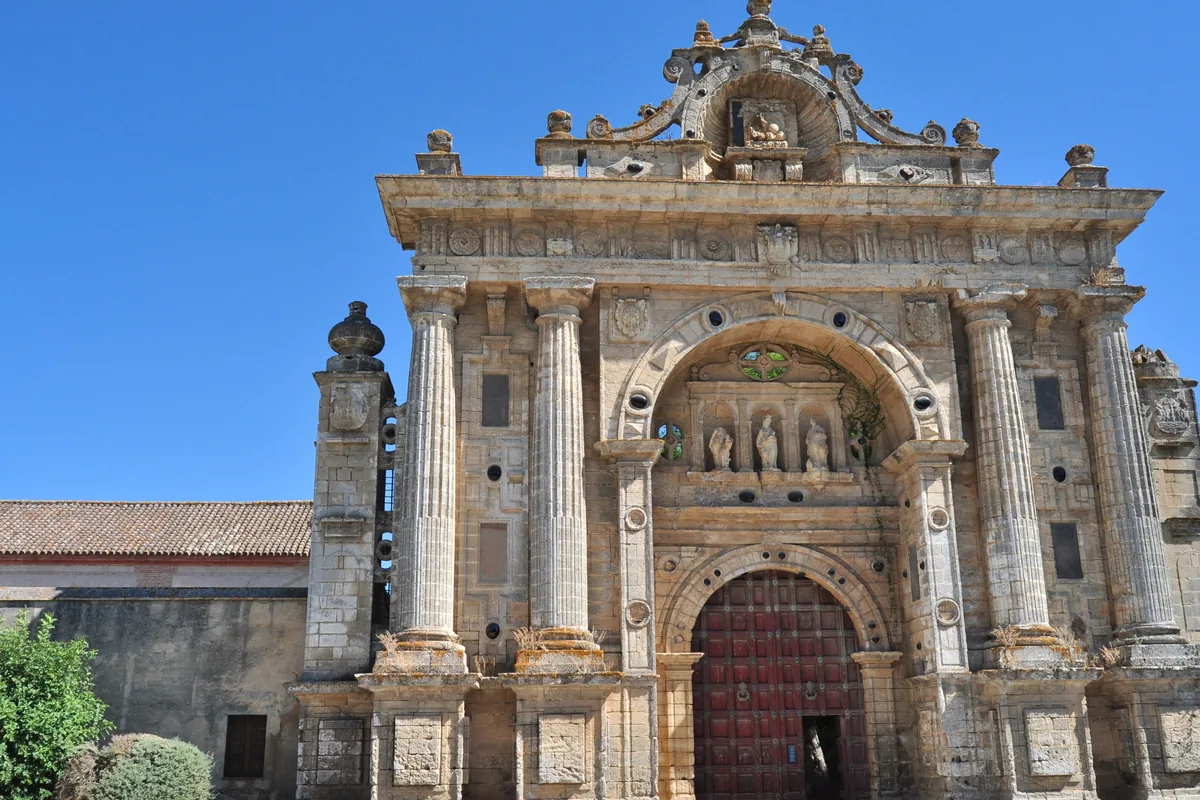
The monastery is the Charterhouse of Jerez, also called Santa María de la Defensión. Wikipedia says the site by the Guadalete river was chosen in 1475 and that construction began in the Late Gothic style in the 15th century. The Ministry of Agriculture says breeding of the line began there in the late 15th century, on the dehesa of Fuente del Suero beside the monastery. English Wikipedia adds that the monks resisted royal orders to cross their horses with Neapolitan and Central European breeds, although they did bring in Arabian and Barb bloodlines.
A bloodline, not a separate breed
The name carries a claim of purity, and the sources handle it with care. Wikipedia's article on the Andalusian says the Carthusian is generally considered the purest Andalusian strain, then adds that no genetic evidence for this claim is known. It also reports a 2006 genetic study that found no genetic differences between Carthusian and other Purebred Spanish horses. The Carthusian is best understood as a historic line kept first by one institution and then by the state, rather than as a genetically distinct breed. Wikipedia notes that the monks kept some of Europe's earliest recorded pedigrees.
The stud farm today
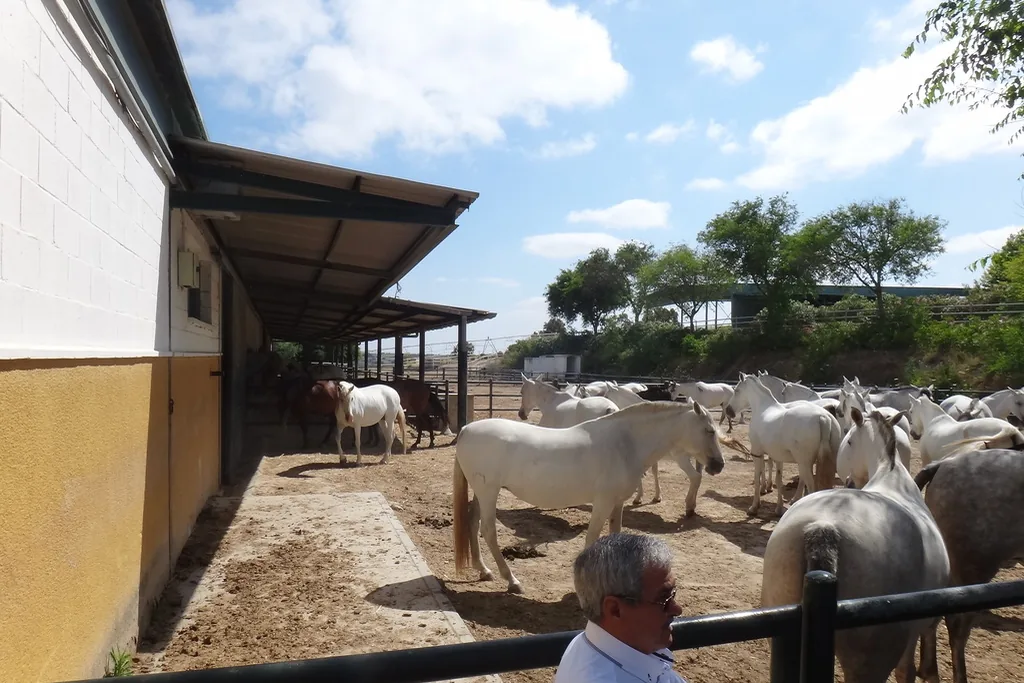
Today the farm is state property. The Ministry of Agriculture says the Yeguada Cartuja Hierro del Bocado belongs to the state's Dirección General de Patrimonio del Estado, falls under the ministry, and is managed by a state company, Expasa. The ministry named it a national zootechnical reference centre for the equine sector in March 2019. Spanish Wikipedia lists a stallion courtyard, a historic tack room, a carriage museum, covered and open riding arenas, a veterinary clinic and germplasm banks among its facilities. English Wikipedia says that in 1835 the convent's stud farm was dissolved and the horses passed to the Spanish state.
The visit in the order it runs
The booking page promises a guided tour followed by a dressage exhibition, and a reviewer confirms the order: the walk first, the show after. Which yards your group passes depends on the guide and the day. Put together, the booking page and the ministry's description of the farm's own visits suggest this outline:
- Meeting the guide at the farm and hearing the history of the Carthusian line.
- Walking past the mares and this year's foals, with free-running colts and stallions.
- Stops that may include the stallion yard, the mare barn, the historic tack room, the carriage museum and the stables.
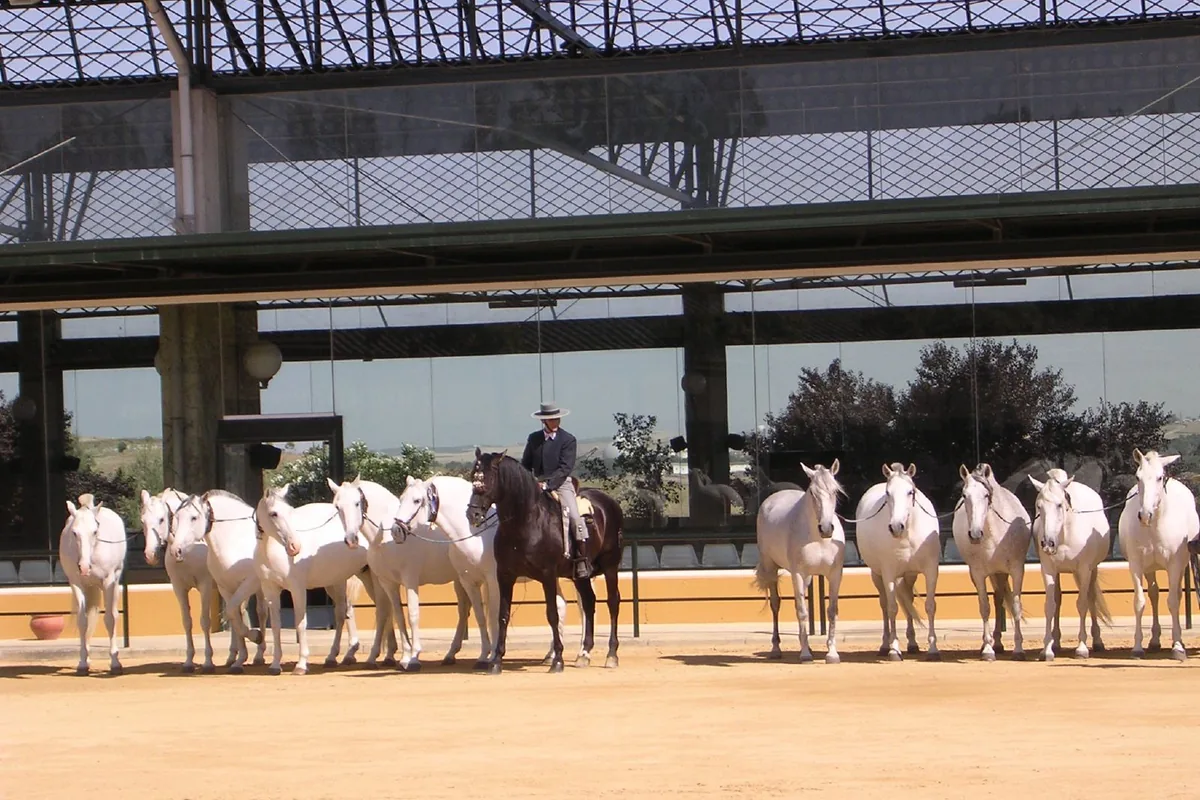
- A dressage exhibition in the main arena to close.
How close you get
Reviewers say the strength of the visit is contact with the animals. The booking page's review summary praises informative tours with close contact to the horses, and one traveller writes of being able to stroke them. Another calls the show short and sharp, with a great view of the performing horses. One caution recurs: some travellers say large groups and low volume made the guide hard to hear. Stand near the front when the group gathers, and ask a question early so the guide knows you are listening.
Grey horses, and why the foals look dark
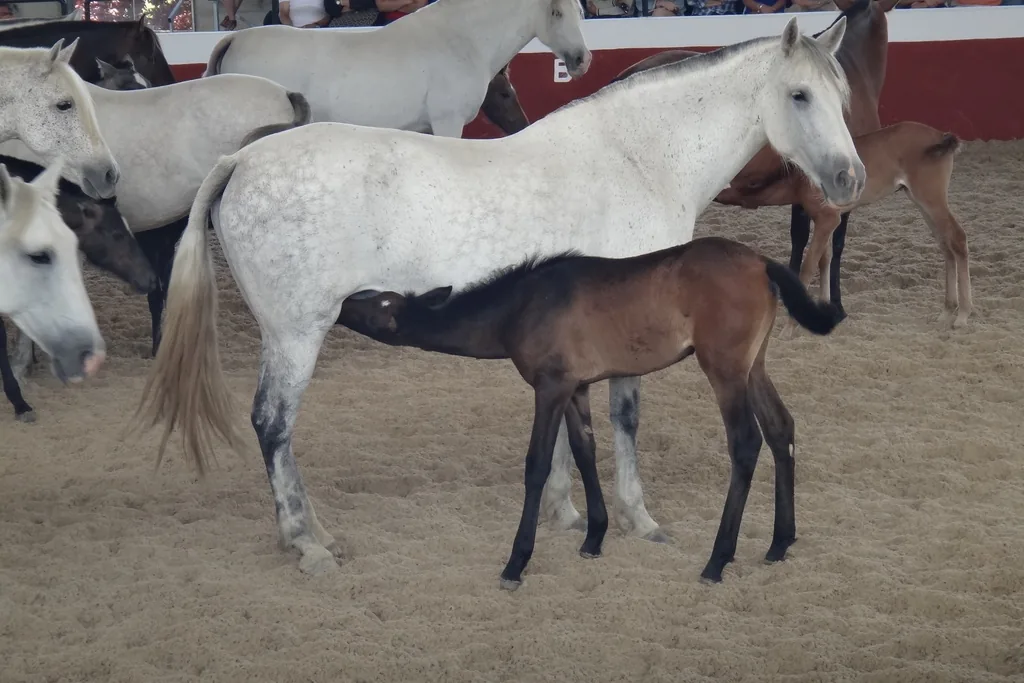
Wikipedia says grey horses are typically born a darker colour and lighten through progressive depigmentation of the coat. White hairs usually appear by about one year, and the coat is completely or almost completely white by roughly six to twelve years. Dappling is an intermediate stage, usually seen in young adults. That explains a sight the visit puts side by side: pale mares beside foals that are bay or dark grey, with young horses in between. Wikipedia adds that grey is the majority colour among Andalusians.
What reviewers say
The page rates the visit 4.8 from 1,087 reviews, and its review summary gives the guide and the value for money 4.8 apiece. Travellers praise informative tours, close contact with the horses and a well-run show, and call the visit worthwhile and enjoyable. Individual reviewers single out the guide's way of explaining things and the humour along the way. A Likely to sell out tag also appears; read it as a nudge to choose a date early, not as a verdict on quality.
What it isn't
It is not a riding session: the booking page describes a tour and a show, and anything beyond that is a question for the provider. It is not a visit inside the monastery, which Wikipedia says the Sisters of Bethlehem continue to inhabit. It is not a large gala production either. And it is not an outing for a video camera, because the booking page rules out video filming, and pets too, with assistance dogs the only exception. Comfortable shoes and clothes are advised, and the page's packing list includes a face covering.
Who this isn't for
Anyone who wants to ride, who wants a long evening with dinner, or who wants a quiet one-to-one conversation with a horse specialist will find this a poor fit. The group tour has a set outline, and the farm is outside the city, so travellers without a car should plan their route. If sun, dust and stable smells are not for you, a bodega visit may suit better. For everyone else, the tour and show are a compact way to see a historic line at work.
Read next: A stud-farm visit or a horse show: which suits you?
Booking the visit
Choose a date in the calendar, which gives a start time for every day; the email after booking shows it again. Free cancellation applies up to the day before, and paying can wait. The live guide works in Spanish, English and German, so choose the language option that matches yours.
Frequently asked questions
What is a Carthusian horse?
A bloodline of the Pura Raza Española, called the Cartujano in Spanish, bred by the Carthusian monks of Jerez from the late 15th century. It is predominantly grey and, Wikipedia notes, a bloodline group rather than a separate breed.
What happens on the visit?
A live guide walks the group past mares, foals, colts and stallions, and a dressage exhibition in the main arena closes the visit. It lasts roughly two and a half hours.
Can I ride a horse?
The booking page describes a tour and a show, not a ride. Ask the provider through your confirmation if you want anything more.
Can I film the horses?
No video filming, says the booking page. Pets are not permitted either, apart from assistance dogs.
Who runs the stud farm?
Spain's Ministry of Agriculture says the farm belongs to the state's Dirección General de Patrimonio del Estado and is managed by the state company Expasa.
Can I cancel?
Yes. Until the day before the start the booking is refunded in full, and paying can be left for later.
Sources